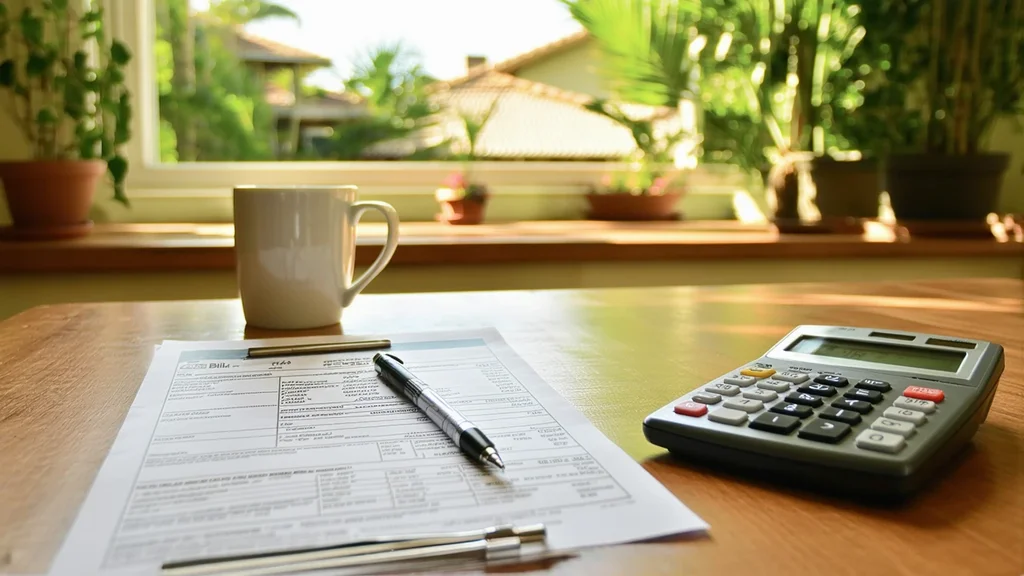
How to Estimate Modern Apartment Monthly Utilities | Choosing to live in a modern apartment is often the best decision for urban citizens who demand practicality, high accessibility, and all-in-one living amenities. High-rise living promises incredible time efficiency because of its strategic location in the heart of city activities. However, behind all the comfort and simplicity offered, there is one crucial aspect that prospective residents frequently overlook during initial calculations: the breakdown of monthly utility bills.
Utility costs such as electricity, water, gas, and domestic waste management are recurring expenses that must be carefully allocated. Without proper planning and calculations, these bills can surprise you at the end of every month and disrupt your personal financial management. Generally, utility expenses for a single apartment unit range from $150 to $250 per month, depending on the geographic location and local baseline rates. This figure cannot be generalized, as it is heavily influenced by the size of the residential unit, the local climate, and the daily consumption habits of the residents themselves.
1. Using the Consumption Formula for Independent Prediction
The most scientific and measurable way to project monthly expenditures is to calculate the energy consumption of your primary electronic appliances. Climate control devices like Air Conditioners (AC) and water heaters are the two largest components that draw the most electricity within an apartment space.
To avoid risky guesswork that could burden your wallet, you can apply a very simple, baseline energy consumption formula. This mathematical approach will help you see transparently where every watt of electricity goes and exactly how much you need to pay.
Appliance Cost Estimation Formula: Monthly Cost = (Appliance Wattage in kW) × (Hours Used per Day) × (Days in a Month) × (Your Local Electricity Rate per kWh)
Applying this formula in practice is very straightforward. The first step you need to take is to check the power specification sticker attached to your electronic device, then convert the unit from Watts to Kilowatts (kW) by dividing it by 1,000. For example, if you operate an AC with a power capacity of 800 Watts, it means the AC consumes 0.8 kW of power.
Next, multiply that 0.8 kW by the estimated actual usage duration in a day—for instance, 10 hours. The result of that multiplication is then multiplied again by the total days in a full month (30 days), and finally multiplied by the baseline electricity rate per kWh set by your local utility provider. Through this independent simulation, you can immediately identify which devices are energy hogs and begin setting strategies to limit usage time to reduce expenditures significantly.
2. Tracking Unit Historical Data Through Third Parties
In addition to relying on mathematical calculations on paper, you can also gather real field data before signing a lease agreement or purchasing a unit. Observing the energy consumption track record of the targeted apartment unit is a smart tactic to get a budget projection that closely matches reality.
Asking the Landlord or Property Manager Directly
Before a final agreement is reached, do not hesitate to request the utility bill history for the past 12 months from the landlord or property agent. A full year of historical data is highly valuable because it reveals seasonal spikes transparently. From those records, you can clearly see how bill surges occur during specific seasons, such as during extreme weather when air conditioners are forced to work much harder than usual.
Utilizing Local Utility Company Services
If the previous owner has difficulty providing this data due to privacy reasons or missing documents, you still have another equally accurate option. Try contacting or visiting the official website of the local utility service provider and grid operator. In today’s digital era, most utility companies are equipped with digital calculator features based on zip codes or regions. This facility allows the public to compare the average energy usage volume of similar-sized housing types in the area, enabling you to get an objective benchmark.
3. Mapping Estimates Based on Apartment Dimensions
Room volume plays a dominant role in determining the quantity of energy required to light, cool, or heat a home. Modern apartments generally follow standard layout sizes, which are divided into several types, and each type carries a different average utility bill estimate.
The Studio or One-Bedroom type is a favorite choice for singles or young couples. For these compact units, baseline utility costs usually sit at the lowest range, roughly $100 to $150 per month. This figure is relatively small because the space that needs climate control is limited, making the use of lights, AC, and other electronic devices far more efficient.
The Two-Bedroom type offers more breathing room, but the consequence is an increase in the monthly utility burden, which climbs to an estimated $150 to $225 per month. The addition of another room partition automatically adds new lighting points and demands the use of additional cooling units to keep comfort levels evenly distributed.
The Three-Bedroom type or Larger is designed for families requiring spacious living. This large-scale high-rise housing demands a higher utility budget allocation, starting from $200 to exceeding $300 every month. The massive floor surface area and high intensity of daily activities from all family members become the primary triggers for the simultaneous surge in water and electricity usage volume.
4. Anticipating Hidden Cost Components
A fatal mistake that new residents often make is assuming that utility costs revolve strictly around electricity and water bills. In reality, the apartment management ecosystem possesses a far more complex payment structure compared to conventional landed houses. There are various bound additional cost components that must be calculated from the start to prevent ruining your monthly cash flow projections.
First, high-speed broadband internet service. As an essential supporter of digital activities, entertainment, or work-from-home needs, internet services usually take a constant cost ranging between $60 to $80 each month.
Second, the Iuran Pengelolaan Lingkungan (IPL) or HOA/Building Amenity Fees. This cost is allocated for the maintenance of external public areas such as swimming pools, fitness centers, lobbies, and 24-hour security systems. The amount varies between $30 to $100 per month, where some apartment managements occasionally include trash collection or basic cable TV packages into this flat fee.
Third, specific sanitation fees, sewer maintenance, and pest control. These components are frequently billed separately by property management as flat administrative fees, usually costing around $15 to $30 per month. Understanding these precise details when reading a lease agreement will save you from unpleasant financial surprises.
5. Aligning the Budget with Habits and Lifestyle
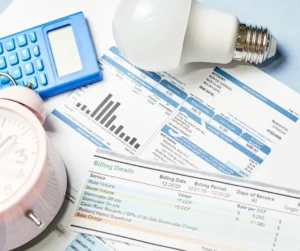
Ultimately, all estimated numbers, mathematical formulas, and historical data will point back to one dynamic deciding factor: your own daily habits and lifestyle. No matter how advanced the appliances are or how efficient the building is, it will not be able to cut expenses if the residents’ consumption patterns are uncontrolled.
For those who undergo flexible work arrangements or rely fully on a Work From Home (WFH) system, you must be prepared to allocate your utility budget at the highest threshold. Being inside the apartment unit for a full 24 hours a day means work devices, lighting, ventilation systems, and air conditioning will operate without stopping, which will undoubtedly drive up the electricity usage graph drastically.
The intensity of using domestic appliances that carry heavy wattages also plays a role in determining the thickness of your bills. If you are used to drying clothes using a high-powered clothes dryer every day, running the automatic dishwasher repeatedly, or letting the climate control system run while the unit is empty, prepare to face swelling bills at the end of the month.
The best preventive step is to adopt an energy-wise lifestyle from your very first day in the apartment. Turning off unused lights, washing clothes at full capacity to conserve water, and maximizing natural lighting from large apartment windows are small steps that, when done consistently, will bring a highly significant positive impact to your long-term financial health.