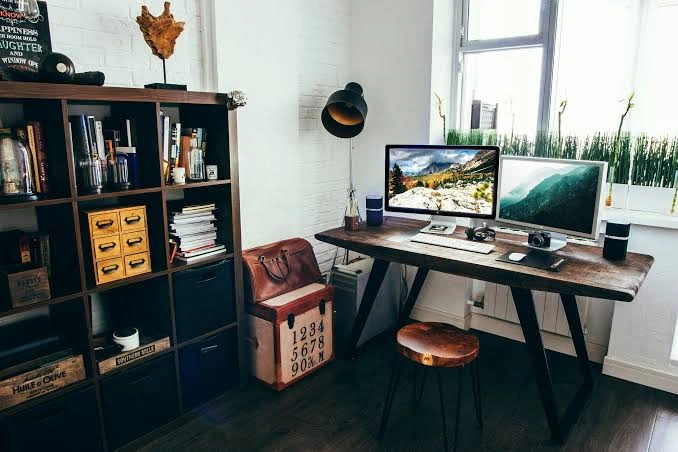
Creating a Productive Home Office Setup in a Studio Apartment
Creating a Productive Home Office Setup in a Studio Apartment | Choosing a high-rise apartment in the heart of the city often means compromising on square footage. Studio apartments have become a popular choice because they are practical, efficient, and low-maintenance. However, a major challenge arises when you have to bring your job into a living space that consists of just one open room. Without a solid strategy, a cozy bed can easily ruin your productivity—or worse, a pile of work documents can destroy your peace of mind during your downtime.
The ultimate key to creating a productive home office in a studio apartment comes down to visual separation and multi-functional design. Merging your private life and professional responsibilities on a single floor requires creativity so that limited space never holds your career back.
The Art of Optimizing Your Floor Plan
The first step is reshaping how you look at your available square footage. Instead of focusing only on horizontal floor space, start looking at the vertical potential of your walls. Bulky, traditional furniture with thick legs will only make a studio apartment feel cramped and claustrophobic.
As a solution, consider switching to a floating wall-mounted desk or a ladder desk. These types of desks attach directly to the wall and usually come with integrated shelving at the top. Because the area beneath the desk remains free of heavy furniture legs, the visual flow of the room stays open, and the floor is much easier to clean.
Beyond utilizing your walls, corner spaces that are often ignored can actually be your greatest asset. A specially designed corner desk fits perfectly into dead zones. When positioning your desk in a corner, try facing your chair toward the wall or an outside window. This position is highly effective at cutting off your view from the temptation of the bed or television during working hours.
Another clever option is repurposing an unused closet or a wall nook. You can remove the closet doors, install a sturdy desktop inside, and add a small spotlight. This concept, often called a “cloffice” (closet office), is highly valued for its functionality: as soon as your workday is done, you simply close the doors or a curtain, and your workspace instantly vanishes from sight.
Building Psychological Boundaries Through Visual Separation
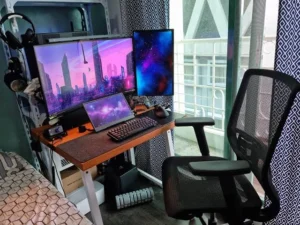
The biggest drawback to working from a studio apartment is the blurry line between work hours and relaxation time. Staying in the exact same room all day can easily trigger mental fatigue. Because of this, you need to create the illusion of boundaries or visual zones so your brain knows when to focus and when to unwind.
The easiest way to map out your workspace is by placing a small, distinct area rug directly under your desk and office chair. Choose a rug with a color or pattern that contrasts slightly with your apartment flooring. Psychologically, stepping onto that rug sends a clear signal to your mind that you have now entered the “office,” even if it is only two steps away from your bed.
If you want a more physical boundary without making the room feel dark, make use of an open-backed bookshelf. Position this shelf perpendicular to the wall to separate your sleeping area from your workspace. The advantage of this layout is that natural sunlight can still pass through to all corners of the room, preventing the apartment from feeling smaller while giving you extra privacy during video calls.
In addition to physical dividers, lighting plays a crucial role in setting a working atmosphere. Dedicate one specific desk lamp to be turned on only when you are actively working. The focused beam from this lamp helps boost concentration. The moment you finish your tasks for the day, turn it off immediately. This simple ritual of switching off your work light acts as a mental trigger that helps your brain transition back into relaxation mode.
Storage Management: The Real Enemy is Clutter
In a limited living space, even a little bit of mess can immediately ruin the aesthetics and your concentration. Visual clutter on a desk is proven to increase stress hormones and lower focus. Therefore, a neat and tidy storage system is absolutely non-negotiable for a studio apartment that doubles as an office.
Optimize the area above your desk by installing floating shelves or a pegboard. On this board, you can hang stationery, important notes, and small decor items without taking up any surface space on your desk. The golden rule is simple: keep your desk surface as clear as possible of items you aren’t currently using.
Another aesthetic issue that frequently disrupts the comfort of modern apartments is the tangle of electronic cords. Laptop chargers, monitor wires, lamp cords, and phone cables snaking across the floor look incredibly messy. Use an under-desk cable management tray and zip-ties to hide all these power lines out of sight from your relaxation area.
It is also worth investing your budget in multi-purpose furniture. A storage ottoman or a small bench with a lift-top can serve as a neat hiding place for work documents over the weekend. The desk drawers you use should also have flexible dividers, allowing them to share space for office supplies and household items like spare linens or personal collections.
Protecting Your Body with Ergonomic Design
While apartment aesthetics are important, physical health should never be sacrificed for style. Working for hours on a couch or slouching over a bed will eventually lead to chronic neck and back pain.
When choosing an office chair, look for one that provides excellent lumbar support. Fortunately, many manufacturers now create ergonomic office chairs with minimalist designs and compact sizes. Opt for a chair without bulky armrests, or one that can slide completely underneath your desk when not in use, keeping the walking paths in your apartment completely clear.
Screen height is another crucial factor that laptop users often forget. Staring downward for long periods puts excessive strain on your neck muscles. Use a laptop riser or an external monitor adjusted to your eye level. Using this extra support not only saves your posture but also frees up space underneath the stand to tuck your keyboard away when you clock out.
Maintaining Life Balance in a Small Space
Ultimately, building the ideal workspace in a studio apartment is about respecting your own living environment. By combining smart furniture choices, sharp visual zoning, neat storage habits, and attention to physical health, your daily productivity is guaranteed to rise without sacrificing the comfort of your home.
Your home is the place you return to for rest, and with careful planning, that comfort will not disappear just because there is an efficient little office corner inside it. Creativity in spatial layout is proven to keep your mental well-being and professional life moving forward in perfect harmony.

How to Estimate Modern Apartment Monthly Utilities
How to Estimate Modern Apartment Monthly Utilities | Choosing to live in a modern apartment is often the best decision for urban citizens who demand practicality, high accessibility, and all-in-one living amenities. High-rise living promises incredible time efficiency because of its strategic location in the heart of city activities. However, behind all the comfort and simplicity offered, there is one crucial aspect that prospective residents frequently overlook during initial calculations: the breakdown of monthly utility bills.
Utility costs such as electricity, water, gas, and domestic waste management are recurring expenses that must be carefully allocated. Without proper planning and calculations, these bills can surprise you at the end of every month and disrupt your personal financial management. Generally, utility expenses for a single apartment unit range from $150 to $250 per month, depending on the geographic location and local baseline rates. This figure cannot be generalized, as it is heavily influenced by the size of the residential unit, the local climate, and the daily consumption habits of the residents themselves.
1. Using the Consumption Formula for Independent Prediction
The most scientific and measurable way to project monthly expenditures is to calculate the energy consumption of your primary electronic appliances. Climate control devices like Air Conditioners (AC) and water heaters are the two largest components that draw the most electricity within an apartment space.
To avoid risky guesswork that could burden your wallet, you can apply a very simple, baseline energy consumption formula. This mathematical approach will help you see transparently where every watt of electricity goes and exactly how much you need to pay.
Appliance Cost Estimation Formula: Monthly Cost = (Appliance Wattage in kW) × (Hours Used per Day) × (Days in a Month) × (Your Local Electricity Rate per kWh)
Applying this formula in practice is very straightforward. The first step you need to take is to check the power specification sticker attached to your electronic device, then convert the unit from Watts to Kilowatts (kW) by dividing it by 1,000. For example, if you operate an AC with a power capacity of 800 Watts, it means the AC consumes 0.8 kW of power.
Next, multiply that 0.8 kW by the estimated actual usage duration in a day—for instance, 10 hours. The result of that multiplication is then multiplied again by the total days in a full month (30 days), and finally multiplied by the baseline electricity rate per kWh set by your local utility provider. Through this independent simulation, you can immediately identify which devices are energy hogs and begin setting strategies to limit usage time to reduce expenditures significantly.
2. Tracking Unit Historical Data Through Third Parties
In addition to relying on mathematical calculations on paper, you can also gather real field data before signing a lease agreement or purchasing a unit. Observing the energy consumption track record of the targeted apartment unit is a smart tactic to get a budget projection that closely matches reality.
Asking the Landlord or Property Manager Directly
Before a final agreement is reached, do not hesitate to request the utility bill history for the past 12 months from the landlord or property agent. A full year of historical data is highly valuable because it reveals seasonal spikes transparently. From those records, you can clearly see how bill surges occur during specific seasons, such as during extreme weather when air conditioners are forced to work much harder than usual.
Utilizing Local Utility Company Services
If the previous owner has difficulty providing this data due to privacy reasons or missing documents, you still have another equally accurate option. Try contacting or visiting the official website of the local utility service provider and grid operator. In today’s digital era, most utility companies are equipped with digital calculator features based on zip codes or regions. This facility allows the public to compare the average energy usage volume of similar-sized housing types in the area, enabling you to get an objective benchmark.
3. Mapping Estimates Based on Apartment Dimensions
Room volume plays a dominant role in determining the quantity of energy required to light, cool, or heat a home. Modern apartments generally follow standard layout sizes, which are divided into several types, and each type carries a different average utility bill estimate.
The Studio or One-Bedroom type is a favorite choice for singles or young couples. For these compact units, baseline utility costs usually sit at the lowest range, roughly $100 to $150 per month. This figure is relatively small because the space that needs climate control is limited, making the use of lights, AC, and other electronic devices far more efficient.
The Two-Bedroom type offers more breathing room, but the consequence is an increase in the monthly utility burden, which climbs to an estimated $150 to $225 per month. The addition of another room partition automatically adds new lighting points and demands the use of additional cooling units to keep comfort levels evenly distributed.
The Three-Bedroom type or Larger is designed for families requiring spacious living. This large-scale high-rise housing demands a higher utility budget allocation, starting from $200 to exceeding $300 every month. The massive floor surface area and high intensity of daily activities from all family members become the primary triggers for the simultaneous surge in water and electricity usage volume.
4. Anticipating Hidden Cost Components
A fatal mistake that new residents often make is assuming that utility costs revolve strictly around electricity and water bills. In reality, the apartment management ecosystem possesses a far more complex payment structure compared to conventional landed houses. There are various bound additional cost components that must be calculated from the start to prevent ruining your monthly cash flow projections.
First, high-speed broadband internet service. As an essential supporter of digital activities, entertainment, or work-from-home needs, internet services usually take a constant cost ranging between $60 to $80 each month.
Second, the Iuran Pengelolaan Lingkungan (IPL) or HOA/Building Amenity Fees. This cost is allocated for the maintenance of external public areas such as swimming pools, fitness centers, lobbies, and 24-hour security systems. The amount varies between $30 to $100 per month, where some apartment managements occasionally include trash collection or basic cable TV packages into this flat fee.
Third, specific sanitation fees, sewer maintenance, and pest control. These components are frequently billed separately by property management as flat administrative fees, usually costing around $15 to $30 per month. Understanding these precise details when reading a lease agreement will save you from unpleasant financial surprises.
5. Aligning the Budget with Habits and Lifestyle

Ultimately, all estimated numbers, mathematical formulas, and historical data will point back to one dynamic deciding factor: your own daily habits and lifestyle. No matter how advanced the appliances are or how efficient the building is, it will not be able to cut expenses if the residents’ consumption patterns are uncontrolled.
For those who undergo flexible work arrangements or rely fully on a Work From Home (WFH) system, you must be prepared to allocate your utility budget at the highest threshold. Being inside the apartment unit for a full 24 hours a day means work devices, lighting, ventilation systems, and air conditioning will operate without stopping, which will undoubtedly drive up the electricity usage graph drastically.
The intensity of using domestic appliances that carry heavy wattages also plays a role in determining the thickness of your bills. If you are used to drying clothes using a high-powered clothes dryer every day, running the automatic dishwasher repeatedly, or letting the climate control system run while the unit is empty, prepare to face swelling bills at the end of the month.
The best preventive step is to adopt an energy-wise lifestyle from your very first day in the apartment. Turning off unused lights, washing clothes at full capacity to conserve water, and maximizing natural lighting from large apartment windows are small steps that, when done consistently, will bring a highly significant positive impact to your long-term financial health.

Apartment Noise Etiquette: Tips for Peaceful Living
Apartment Noise Etiquette: Tips for Peaceful Living | Living in a high-rise building offers incredible practicality, from strategic downtown locations to seamless access to premium amenities. However, behind the modern walls that separate one unit from another lies a very real challenge that almost every resident will eventually face: noise.
Unlike single-family homes, apartment living requires us to share walls, ceilings, and floors with others. Heavy footsteps, late-night music bass, or a pet’s persistent barking can easily strain neighborly relationships. This is why understanding noise etiquette is so crucial. Finding the balance between your right to enjoy your home and your obligation to respect your neighbors’ peace is the ultimate key to harmonious urban living.
The Core Pillars of Apartment Noise Etiquette

Maintaining a quiet and peaceful apartment environment is easier than it seems. It all begins with self-awareness and understanding how sound travels through a building. Here are the fundamental rules every resident should follow to ensure mutual comfort:
1. Respect Community Quiet Hours
Most apartment complexes have established guidelines regarding quiet hours. Generally, these hours run from 10:00 PM to 7:00 AM on weekdays (Monday through Friday). On weekends, management usually grants a bit more flexibility, setting the window from 11:00 PM to 8:00 AM.
Abiding by these timeframes is not just a formality on paper; it is a direct sign of respect for your neighbors’ rest. During these hours, any high-intensity audio or disruptive activities should stop entirely so everyone can enjoy quality sleep.
2. Test Your Volume with the “Closed-Door” Test
We are often unaware of how easily our TV or music volume bleeds into the hallway. To make sure your indoor audio levels are acceptable, you can perform a quick and simple experiment known as the “closed-door test.”
The process is straightforward:
-
Turn on your television or sound system to your preferred listening volume.
-
Step out of your apartment unit and into the hallway.
-
Close your front door firmly behind you.
-
Listen carefully from the outside.
If you can clearly hear movie dialogue or song lyrics from the corridor, your volume is too high. Head back inside and lower it until the sound no longer escapes into the shared space.
3. Control Subwoofers and Bass Frequencies
Modern audio equipment relies heavily on subwoofers to deliver deep, immersive bass. Unfortunately, low-frequency sound waves travel through solid structures with ease. This thumping vibration can effortlessly penetrate concrete walls, ceilings, and floors—much more easily than human speech.
To prevent this, avoid placing your subwoofer directly against shared walls or sitting flat on bare floors. Additionally, turn off the bass feature entirely once quiet hours begin. Your neighbors’ ears will highly appreciate this small gesture.
4. Cushion Footsteps on Hardwood and Laminate Floors
Wood, laminate, or polished tile flooring adds a beautiful, modern touch to any apartment interior. However, these hard surfaces act like natural amplifiers for footsteps, dropped objects, or sliding furniture. This can quickly turn into a nightmare for the residents living directly beneath you if you occupy an upper-floor unit.
The most practical and stylish remedy is to place large area rugs or thick carpet runners along high-traffic walkways, such as the living room, main corridors, and alongside the bed. A thick rug absorbs vibrations and muffles heavy footsteps significantly while adding warmth to your home design.
5. Be Mindful of Large Home Appliances
Appliances like washing machines, clothes dryers, dishwashers, and vacuums make domestic life incredibly convenient. However, these machines generate constant mechanical vibrations and humming sounds during operation.
Try to complete all your heavy chores well before late evening. Running a washing machine or vacuuming your rugs at 2:00 AM is highly inconsiderate and almost guaranteed to trigger complaints from next door.
6. Support Your Pets’ Well-Being
For those living in a pet-friendly apartment, sharing your home with a dog or cat brings immense joy. However, it also comes with added responsibility. Persistent barking or howling while you are away can quickly become a major source of noise pollution.
If you have to work away from home all day, ensure your pet has plenty of mental stimulation inside the unit. Provide interactive puzzle toys or long-lasting treats to keep them occupied. This is highly effective at preventing separation anxiety, which is the primary cause of stress-induced pet noise.
Smart Steps to Handle Noisy Neighbors
Even if you do your best to keep things quiet, you may occasionally find yourself dealing with an overly loud neighbor. Managing this situation requires a calm mind and a structured approach to resolve the issue without causing long-term hostility.
Here are the most diplomatic steps you can take:
Communicate Directly and Politely
Many people are genuinely shocked to discover that their daily sounds are bothering someone else. The vast majority of noise issues occur due to simple unawareness rather than malice. Therefore, your first step should always be a friendly, direct conversation.
Knock on their door politely, greet them warmly, and explain your situation without sounding accusatory. For instance, you could say: “Hi, sorry to bother you. Your music is carrying quite clearly into my living room, and I’m currently trying to finish up some remote work/get some rest. Would you mind lowering the volume a little bit? Thank you so much for understanding!” A polite, human approach usually yields the best results.
Document the Disturbances
If a friendly face-to-face chat fails to fix the problem and the noise continues regularly, it is time to start gathering evidence. Do not rely solely on your memory. Keep a neat, organized log of the disturbances.
Write down the dates, the exact times the noise starts and ends, and the specific type of sound (e.g., loud music, shouting, or late-night parties). If possible, take a brief audio or video recording from inside your apartment to demonstrate just how disruptive the sound is. This documentation will be essential if you need to escalate the matter.
Involve Property Management
When neighborly diplomacy hits a dead end, hand the issue over to the authorities in charge—your building management or landlord. Submit your written log of the noise disturbances along with any supporting audio evidence.
Property management has a legal and contractual obligation to protect every tenant’s right to “quiet enjoyment.” They can issue formal warnings or address the tenant directly. In most cases, an official notice from management is enough to resolve the issue, as many lease agreements include strict penalties or fines for recurring noise violations.
Contact Local Authorities as a Last Resort
Calling local law enforcement or non-emergency security lines should be saved strictly for extreme, unmanageable situations. For example, if a neighbor is hosting an out-of-control party at 3:00 AM, completely ignoring everyone’s pleas, or if the noise involves a dangerous domestic dispute. Use this option cautiously, as involving the police will likely make any future neighborly relationship incredibly tense.
Creating Harmony in Urban Environments
Ultimately, a comfortable apartment lifestyle is the result of collective effort from all residents. A peaceful living environment does not happen by accident; it is built through tolerance, empathy, and open communication.
By taking proactive steps to soundproof your own life and remaining constructive when dealing with disruptions, you do more than just protect your own peace—you actively contribute to a healthy, safe, and enjoyable high-rise community. Mutual respect is the best foundation for truly turning an urban apartment into a home.

Easy Ways to Start an Eco-Friendly Lifestyle at Home
Easy Ways to Start an Eco-Friendly Lifestyle at Home | Rethinking our daily habits for the sake of the planet does not have to start with complex, large-scale changes. More often than not, environmental awareness grows from the small decisions we make within our personal spaces, such as our houses or apartments. By adopting sustainability principles, we not only help care for the Earth but also create a healthier, more energy-efficient, and cost-effective living environment.

For urban dwellers living in modern housing, implementing an eco-friendly concept can be easily achieved through three main pillars: waste management, energy efficiency, and mindful food consumption.
1. Practicing the Reduce, Reuse, and Recycle Mindset at Home
The most fundamental step to kickstart this transition is evaluating the items we bring into our living spaces. Single-use plastic waste remains one of the biggest challenges to environmental sustainability today.
-
Break Free from Single-Use Plastics: Start replacing disposable shopping bags, water bottles, and plastic straws with reusable alternatives. Keep a few cloth bags near your front door so you never forget to bring them when going out.
-
Conduct a Personal Trash Audit: Pay attention to what fills your trash bin the most over a week. If it is dominated by product packaging, consider switching to buying items in bulk or choosing brands that use eco-friendly packaging.
-
Prioritize Quality Second-Hand Goods: Before deciding to buy new furniture or decor, try exploring vintage markets or thrifting platforms. Repairing what you already have or buying pre-loved items significantly cuts down the carbon footprint generated by manufacturing new products.
2. Conserving Energy and Water for Smart Utility Savings
An eco-friendly home always goes hand in hand with lower monthly expenses. Optimizing utility usage inside your apartment or house is an instant way to contribute to the planet while keeping your wallet happy.
-
Switch to LEDs and Fix Leaks: Replacing all your old incandescent bulbs with LEDs can drastically slash your electricity consumption. Additionally, never ignore a dripping faucet. Fix even the smallest leak immediately, as a constant drip can waste gallons of precious clean water every month.
-
Set Your Thermostat Wisely: Adjusting your air conditioner or heater settings by just one or two degrees can significantly reduce the workload of your electronic devices.
-
Go Paperless (Digitize): Clear the paper clutter on your desk by maximizing digital document storage. Opt for electronic statements (e-statements) for all your monthly bills to minimize tree logging for the paper industry.
3. Sustainable Eating and Smart Composting
The kitchen is where we can make the biggest positive impact on the environment. What we eat and how we treat leftovers heavily dictates our household’s overall carbon footprint.
-
Choose Local and Seasonal Produce: Buying fruits and vegetables grown by local farmers helps cut down long distribution chains, meaning fewer fuel emissions from transport vehicles. Adding more plant-based meals to your weekly menu also helps reduce the heavy impact of large-scale livestock industries.
-
Manage Leftovers by Composting: Organic waste that piles up in landfills releases methane, a harmful greenhouse gas that damages the atmosphere. By separating vegetable scraps, fruit peels, or coffee grounds for composting, you can turn kitchen waste into nutrient-rich fertilizer for your balcony or backyard plants.
Consistency Is Key
Transforming your living space into an eco-friendly sanctuary will not happen overnight. It is a continuous learning process. Once you successfully integrate plastic reduction, energy saving, and food waste management into your daily routine, you are well on your way to a cleaner, greener future. The future of our planet is shaped by what we do inside our homes today.