
Before Choosing an Apartment, Know These Pros and Cons
Before Choosing an Apartment, Know These Pros and Cons | Choosing an apartment is a major decision, whether you are renting your first place, moving to a new city, or looking for a more convenient home. Apartments can offer comfort, security, and easy access to important facilities, but they can also come with limitations that may not be obvious during the first viewing.

Before signing a rental agreement or purchasing an apartment, it is important to understand both the advantages and disadvantages. Looking beyond the appearance of the unit can help you avoid unexpected costs and make a decision that fits your lifestyle and budget.
Here are the most important pros and cons to consider before choosing an apartment.
Pros of Choosing an Apartment
1. Convenient Location
One of the biggest advantages of apartment living is location.
Many apartment buildings are located close to:
- Shopping centers
- Restaurants
- Public transportation
- Schools
- Offices
- Hospitals
- Entertainment venues
A convenient location can reduce commuting time and transportation expenses.
For people who work in busy urban areas, living closer to work can also provide more free time during the day.
2. Access to Shared Facilities
Modern apartment buildings often provide facilities that would be expensive to build and maintain in a private home.
Depending on the property, these may include:
- Swimming pools
- Fitness centers
- Parking areas
- Security systems
- Children’s playgrounds
- Common gardens
- Meeting rooms
- Laundry facilities
These amenities can make apartment living more convenient without requiring residents to maintain everything themselves.
3. Lower Maintenance Responsibilities
Apartment residents generally have fewer maintenance responsibilities than owners of standalone houses.
For example, residents usually do not have to worry about maintaining:
- The building’s exterior
- Shared hallways
- Elevators
- Common gardens
- Building security systems
- Shared infrastructure
When something goes wrong inside the unit, responsibility depends on the rental agreement or ownership arrangement, but major building maintenance is generally handled by the property management or owners’ association.
4. Better Security
Many apartment complexes offer controlled access, security guards, surveillance cameras, or secure entrances.
This can provide an additional sense of security, especially for people who live alone or frequently travel.
However, security varies significantly between properties. A building with impressive security features is not necessarily safer if those systems are poorly maintained.
5. Efficient Use of Space
Apartments are often designed to make efficient use of limited space.
For someone who does not need a large yard or multiple extra rooms, this can be an advantage.
A smaller living space can also encourage a simpler lifestyle because residents have less room to accumulate unnecessary possessions.
6. Community Environment
Apartment buildings bring many people together in the same property.
This can create opportunities to meet neighbors, participate in community activities, and develop social connections.
For some residents, this sense of community is one of the most enjoyable aspects of apartment living.
Cons of Choosing an Apartment
Despite the advantages, apartment living also has several disadvantages that should be considered carefully.
1. Limited Privacy
Living close to other residents can reduce privacy.
You may hear:
- Conversations
- Music
- Footsteps
- Doors closing
- Children playing
- Furniture being moved
The level of noise depends heavily on the building’s construction and the behavior of neighbors.
Before choosing an apartment, visit the property at different times of the day if possible. A quiet apartment during an afternoon viewing may be much noisier at night.
2. Monthly Fees Can Add Up
The advertised rent or purchase price is not always the full cost of living in an apartment.
Depending on the property, you may also have to pay:
- Maintenance fees
- Parking fees
- Utility bills
- Internet
- Security fees
- Building management fees
- Amenity fees
If you are purchasing an apartment, there may also be additional ownership costs and association fees.
Always calculate the total monthly cost, not just the advertised price.
3. Rules and Restrictions
Apartment communities often have rules designed to protect residents and shared spaces.
These rules may cover:
- Pets
- Renovations
- Noise
- Parking
- Guests
- Smoking
- Decorations
- Short-term rentals
Rules are not necessarily a disadvantage, but they can become frustrating if they conflict with your lifestyle.
Read the building regulations before committing to the property.
4. Less Outdoor Space
Many apartments have limited access to private outdoor space.
You may not have:
- A private garden
- A large backyard
- A private terrace
- Space for extensive gardening
If outdoor space is important to you, check whether the apartment has a balcony, rooftop garden, courtyard, or nearby public park.
5. Dependence on Building Management
The quality of apartment living can depend heavily on the building’s management.
Poor management can result in problems such as:
- Slow maintenance
- Broken elevators
- Poor cleanliness
- Security concerns
- Unclear communication
- Poorly maintained facilities
Before choosing an apartment, research the property’s reputation and ask current residents about their experiences.
6. Parking Can Be Difficult
Parking is another issue that is easy to overlook.
Some apartments provide dedicated parking spaces, while others operate on a first-come, first-served basis.
If you own a car, confirm:
- Whether parking is included
- How many spaces are available
- Whether guests can park
- Whether parking costs extra
- How secure the parking area is
A convenient apartment can quickly become frustrating if parking is consistently difficult.
What Should You Check Before Choosing an Apartment?
A property may look perfect during a short viewing, but you should investigate more than the interior.
Check the Location
Consider how long it takes to reach work, school, public transportation, supermarkets, and other places you regularly visit.
A cheaper apartment that requires a long daily commute may ultimately cost more in time and transportation.
Inspect the Apartment Carefully
Look for signs of:
- Water damage
- Mold
- Cracks
- Poor ventilation
- Damaged flooring
- Leaking faucets
- Electrical problems
- Weak water pressure
Do not hesitate to open cabinets, test faucets, inspect windows, and check electrical outlets.
Test Noise Levels
Pay attention to sounds coming from neighboring units, hallways, elevators, roads, and nearby businesses.
If possible, visit during both daytime and evening hours.
Ask About Utilities
Find out which utilities are included and which ones you must pay separately.
This is especially important when comparing apartments with different rental prices.
Read the Agreement
Never rely only on verbal promises.
Read the rental or purchase agreement carefully and pay attention to:
- Deposit requirements
- Contract duration
- Renewal conditions
- Maintenance responsibilities
- Early termination penalties
- Pet policies
- Parking rules
- Additional fees
If something is unclear, ask for clarification before signing.
Apartment vs. House: Which Is Better?
There is no universally correct answer.
The better choice depends on your lifestyle, budget, location, and priorities.
| Factor | Apartment | House |
|---|---|---|
| Maintenance | Usually lower | Usually higher |
| Privacy | Often lower | Usually higher |
| Outdoor space | Limited | Usually more |
| Amenities | Often available | Must provide yourself |
| Location | Often central | May be farther from city centers |
| Community | More interaction | Usually more private |
| Rules | More restrictions | Usually fewer |
| Security | Often managed | Owner manages it |
An apartment may be better for someone who values convenience, amenities, and location.
A house may be better for someone who wants privacy, outdoor space, and greater control over the property.
Questions to Ask Before Choosing an Apartment
Before making your final decision, ask yourself:
- Can I comfortably afford the total monthly cost?
- Is the location convenient for my daily routine?
- Is the apartment quiet enough?
- Are the facilities well maintained?
- Are there additional fees?
- Are pets allowed if I have one?
- Is parking available?
- What are the building’s rules?
- How responsive is the management?
- What happens if I need to end the agreement early?
The answers can help you identify potential problems before they become expensive surprises.
Choosing an apartment is about more than finding a place that looks attractive.
The right apartment should fit your budget, lifestyle, location requirements, privacy preferences, and long-term plans.
Apartments can offer excellent convenience, security, shared facilities, and lower maintenance responsibilities. At the same time, residents may have to deal with limited privacy, additional fees, building rules, parking issues, and dependence on property management.
The best approach is to look at both sides before making a decision.
Take your time, inspect the property carefully, calculate the complete cost, read the agreement, and research the building and its management.
A few hours of careful research before choosing an apartment can save you months or even years of frustration later.
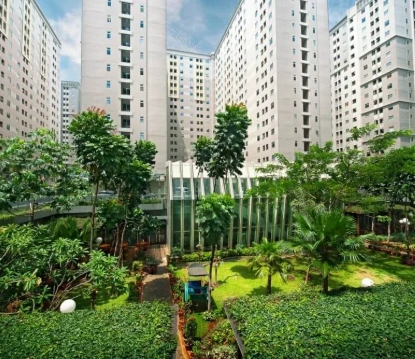
Renting or Buying in Kalibata City: A Minimum Wage Salary Perspective
Renting or Buying in Kalibata City: A Minimum Wage Salary Perspective | Living in Jakarta can be financially challenging, especially for workers earning around the minimum wage. For people considering Kalibata City, one of the biggest questions is whether renting an apartment makes more sense than buying one.
In 2026, the DKI Jakarta Provincial Minimum Wage (UMP) is Rp5,729,876 per month, an increase of 6.17% from the previous year’s Rp5,396,761.
With that income level as a reference, housing costs need to be considered carefully. Kalibata City offers relatively accessible apartment options, but the difference between renting and buying can have a major impact on a minimum-wage worker’s monthly budget.
Understanding the Cost of Living in Kalibata City
Kalibata City is located in South Jakarta and is known for offering apartment units in various sizes and price ranges. Its location also provides access to public transportation, shopping areas, workplaces, and everyday services.
Current rental listings show that prices can vary considerably depending on the tower, unit size, furniture, and rental period. Some studio units are listed around Rp2.46 million to Rp2.84 million per month, while some 1BR and 2BR units are available for roughly Rp3.5 million to Rp5 million or more.
This means a minimum-wage worker could potentially find a unit within Kalibata City, but affordability is a much bigger question than availability.
How Much of a Minimum Wage Salary Goes to Rent?
Using the 2026 Jakarta minimum wage of Rp5,729,876 as a simple reference, consider a studio costing Rp2.5 million per month.
That rent represents approximately 44% of the monthly minimum wage.
A Rp3.5 million apartment would consume about 61% of the monthly wage, while a Rp4 million apartment would use almost 70%.
| Monthly Rent | Approx. Share of Rp5,729,876 Salary |
|---|---|
| Rp2.5 million | 44% |
| Rp3 million | 52% |
| Rp3.5 million | 61% |
| Rp4 million | 70% |
| Rp5 million | 87% |
These figures do not include electricity, water, internet, transportation, food, maintenance-related charges, deposits, or other personal expenses.
For someone earning exactly the minimum wage, living alone in a larger apartment could therefore become financially restrictive.
Is Renting Still the Better Option?
For most minimum-wage workers, renting is generally more realistic than buying.
Renting requires less upfront capital and gives workers flexibility if they change jobs or move to another part of Jakarta. It also avoids the long-term financial commitment associated with purchasing property.
Current listings demonstrate that lower-priced options do exist. For example, one current Kalibata City listing shows a studio at around Rp2.62 million per month, while another lists a furnished studio at Rp2.84 million.
There are also listings below Rp4 million for certain 2BR units. Rumah123 currently shows examples around Rp3.5 million and Rp3.9 million per month.
For a minimum-wage worker, however, the most affordable unit is usually the more practical choice.
What About Buying an Apartment?
Buying can appear attractive because monthly mortgage payments may eventually lead to property ownership. However, the affordability calculation is more complicated.
A buyer needs to consider:
- Down payment
- Mortgage payments
- Interest
- Apartment maintenance fees
- Utilities
- Property taxes and other charges
- Notary and transaction costs
- Furniture and renovation
- Emergency savings
For someone earning the Jakarta minimum wage, accumulating a sufficient down payment can be difficult while also covering daily expenses.
Buying also reduces financial flexibility. If the buyer loses their job or needs to relocate, selling an apartment can take time.
Renting Can Provide More Financial Flexibility
One of the biggest advantages of renting is the ability to keep more money available for emergencies.
Imagine a worker earning Rp5.73 million per month and paying Rp2.5 million in rent. Around Rp3.23 million remains before other expenses.
That remaining amount still needs to cover food, transportation, phone and internet bills, utilities, personal expenses, and savings.
If the worker chooses a Rp4 million apartment instead, only about Rp1.73 million remains.
This illustrates why rent price matters more than apartment size for a minimum-wage household.
Sharing an Apartment Can Change the Calculation
Sharing a two-bedroom apartment with a trusted roommate can make Kalibata City considerably more affordable on an individual basis.
For example, a Rp4 million apartment shared equally between two people would mean approximately Rp2 million per person before utilities and other shared costs.
This can make a larger unit more realistic than renting the same property alone.
However, shared housing comes with practical considerations. Roommates need clear agreements about rent, utilities, deposits, cleaning, guests, and other household responsibilities.
What About a Long-Term Rental?
Longer rental periods can sometimes provide better value than paying month-to-month.
For example, one 2026 listing for a furnished 2BR Kalibata City apartment offers Rp9.9 million for three months, or approximately Rp3.3 million per month. Another unfurnished unit is listed at Rp8.5 million for three months, approximately Rp2.83 million per month.
However, longer leases require more cash upfront.
A worker should not choose a cheaper effective monthly rate if paying several months in advance would leave them without an emergency fund.
When Does Buying Make More Sense?
Buying becomes more reasonable when a person’s income is significantly higher than the minimum wage, they have stable employment, and they have enough savings for the upfront costs.
A potential buyer should ideally have:
- A stable source of income.
- An emergency fund.
- Money available for the down payment and transaction costs.
- A manageable monthly housing payment.
- A plan to remain in the property for several years.
Without these conditions, renting can provide greater financial flexibility.
A Practical Budget for a Minimum-Wage Worker
Someone earning the 2026 Jakarta minimum wage should approach Kalibata City housing with a strict budget.
A lower-cost studio around Rp2.5–Rp3 million may be more manageable than a Rp4–Rp5 million apartment. Current listings show that studios and smaller units can be found within that lower range.
The goal should not simply be finding the most attractive apartment. The goal should be finding housing that leaves enough money for the rest of life.
A practical budget should account for:
- Housing
- Food
- Transportation
- Electricity and water
- Internet and phone
- Healthcare
- Emergency savings
- Personal expenses
If rent consumes more than half of the salary, the remaining budget can become very tight.
Renting vs. Buying: Which Is Better?
For a worker earning around the Jakarta minimum wage, renting generally has the stronger financial case.
Renting is better when:
- You have limited savings.
- Your income is still developing.
- You may change jobs or locations.
- You want to avoid mortgage debt.
- You need flexibility.
Buying may be better when:
- Your income is comfortably above the minimum wage.
- You have substantial savings.
- Your employment is stable.
- You plan to stay in the property for many years.
- The total housing cost is comfortably affordable.
The decision should be based on income and financial stability rather than simply the desire to own property.
Renting or buying in Kalibata City looks very different from the perspective of a minimum-wage worker.
With Jakarta’s 2026 UMP at Rp5,729,876 per month, even a relatively affordable apartment can consume a significant portion of monthly income.
Current Kalibata rental listings show that lower-cost studios can be found around Rp2.5 million to Rp3 million per month, while larger units can cost Rp3.5 million, Rp4 million, or considerably more.
For most workers earning close to the minimum wage, renting a modest unit—or sharing an apartment—is likely to be more practical than buying. The priority should be maintaining enough cash flow for food, transportation, emergencies, and savings.
Buying can become an attractive long-term goal as income and savings grow. Until then, choosing an affordable rental and maintaining financial flexibility may be the safer strategy.
Creating a Stylish Modern Apartment with Informa, Dekoruma, and Vivere
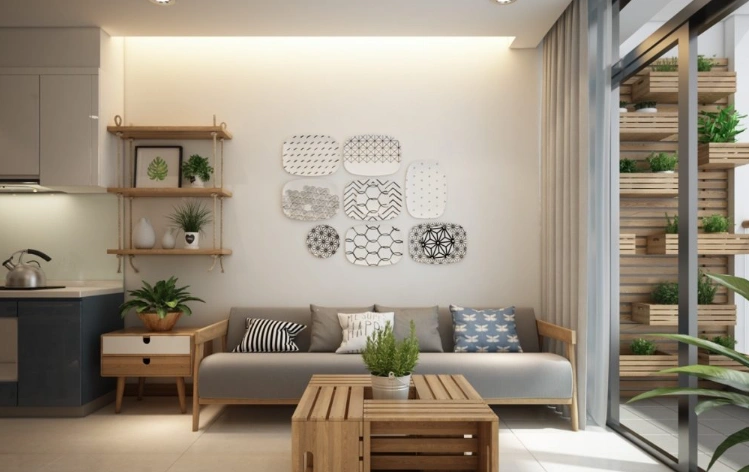
Creating a Stylish Modern Apartment with Informa, Dekoruma, and Vivere | Creating a stylish modern apartment is not only about choosing beautiful furniture but also about designing a space that feels comfortable, functional, and reflects personal taste. A well-designed apartment combines smart layouts, practical storage solutions, and carefully selected decorations to create a balanced living environment.
Today, many homeowners and apartment residents look for furniture brands and interior solutions that can help transform limited spaces into elegant and comfortable homes. Brands such as Informa, Dekoruma, and Vivere have become popular choices for people who want modern designs with practical features.
With the right planning, even a small apartment can become a stylish place that supports daily activities while maintaining a beautiful appearance.
Understanding Modern Apartment Design
Modern apartment design focuses on simplicity, functionality, and clean visual elements. Instead of filling every corner with furniture, modern interiors prioritize useful pieces that create an open and organized atmosphere.
Some important characteristics of modern apartment design include:
- Minimalist furniture choices.
- Neutral color combinations.
- Functional storage solutions.
- Clean lines and simple shapes.
- Comfortable spaces for daily activities.
The goal is to create a home that looks attractive while remaining practical for everyday living.
Choosing the Right Furniture with Informa
Informa is known as one of the furniture destinations that offers various options for modern homes. From sofas and dining sets to bedroom furniture and office solutions, Informa provides choices for different apartment styles.
Creating a Comfortable Living Room
The living room is often the main area where residents relax and welcome guests. Choosing the right furniture can make this space feel more inviting.
Modern apartment living rooms can be improved with:
- Compact sofas for limited spaces.
- Multifunctional tables.
- Comfortable chairs with simple designs.
- Decorative lighting elements.
A carefully selected sofa combined with suitable decorations can instantly change the atmosphere of an apartment.
Maximizing Small Spaces
Apartments often have limited space, so furniture selection becomes important. Multifunctional furniture helps residents maximize every area.
Examples include:
- Storage cabinets with modern designs.
- Foldable tables.
- Compact shelves.
- Furniture with hidden storage.
These solutions help maintain a clean and organized apartment.
Designing Functional Spaces with Dekoruma
Dekoruma focuses on modern interior solutions that combine furniture, decoration, and home design concepts. It helps homeowners create spaces that are both stylish and personalized.
Creating a Personalized Interior Style
Every apartment has a different character. Dekoruma-inspired designs encourage homeowners to combine functionality with personal preferences.
Popular modern styles include:
Minimalist Style
A minimalist apartment uses simple furniture, neutral colors, and organized layouts to create a calm environment.
Scandinavian Style
Scandinavian interiors emphasize natural elements, bright colors, and comfortable furniture.
Contemporary Style
Contemporary designs combine modern trends with practical solutions for everyday living.
Choosing the right style helps create a consistent look throughout the apartment.
Adding Elegance with Vivere Interior Solutions
Vivere is known for providing premium interior solutions that focus on quality, craftsmanship, and elegant design. For homeowners who want a more sophisticated apartment atmosphere, carefully selected interior elements can create a luxurious feeling.
Creating a Premium Apartment Feel
Small details can make a significant difference in modern interiors.
Some ideas include:
- High-quality materials.
- Elegant lighting arrangements.
- Stylish wall decorations.
- Carefully selected accessories.
A combination of simple furniture and premium finishing touches can create a balanced modern apartment design.
Combining Furniture and Decoration Effectively
A successful apartment design requires harmony between furniture, colors, and decorations. Choosing individual items without considering the overall concept may create an inconsistent appearance.
Use a Consistent Color Theme
Neutral colors such as white, gray, beige, and natural wood tones are commonly used in modern apartments because they create a clean and timeless look.
Focus on Functionality
Every piece of furniture should have a purpose. Avoid unnecessary items that make the apartment feel crowded.
Add Personal Touches
Decorations such as artwork, plants, books, and personal collections can make the apartment feel more unique.
Smart Tips for Small Modern Apartments
Living in a small apartment does not mean sacrificing style. With smart planning, limited spaces can still feel spacious and comfortable.
Use Vertical Storage
Tall shelves and wall-mounted storage can save floor space while providing additional organization.
Choose Multi-Purpose Furniture
Furniture that serves multiple functions is ideal for apartment living.
Examples:
- Sofa beds.
- Expandable dining tables.
- Storage benches.
Maintain Organization
A modern apartment looks best when everything has its own place. Regular organization helps maintain a clean and comfortable environment.
Creating a Comfortable Lifestyle Through Interior Design
Interior design is not only about appearance. A good apartment design improves the way people live, work, and relax.
A comfortable home should provide:
- A relaxing area after a busy day.
- Functional spaces for work or study.
- Organized storage areas.
- A welcoming atmosphere.
The combination of smart furniture choices and thoughtful decoration creates a home that feels practical and enjoyable.
Creating a stylish modern apartment requires careful planning, suitable furniture selection, and attention to details. Brands such as Informa, Dekoruma, and Vivere offer various solutions for homeowners who want to create beautiful and functional living spaces.
By focusing on layout, comfort, storage, and personal style, any apartment can become a modern home that reflects personality and supports everyday life.
A well-designed apartment is not just a place to live but a space where comfort, creativity, and modern lifestyle come together.