Renting or Buying in Kalibata City: A Minimum Wage Salary Perspective
Renting or Buying in Kalibata City: A Minimum Wage Salary Perspective | Living in Jakarta can be financially challenging, especially for workers earning around the minimum wage. For people considering Kalibata City, one of the biggest questions is whether renting an apartment makes more sense than buying one.
In 2026, the DKI Jakarta Provincial Minimum Wage (UMP) is Rp5,729,876 per month, an increase of 6.17% from the previous year’s Rp5,396,761.
With that income level as a reference, housing costs need to be considered carefully. Kalibata City offers relatively accessible apartment options, but the difference between renting and buying can have a major impact on a minimum-wage worker’s monthly budget.
Understanding the Cost of Living in Kalibata City
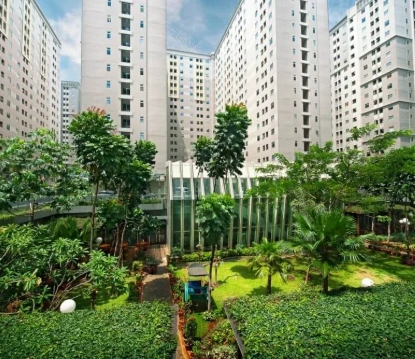
Kalibata City is located in South Jakarta and is known for offering apartment units in various sizes and price ranges. Its location also provides access to public transportation, shopping areas, workplaces, and everyday services.
Current rental listings show that prices can vary considerably depending on the tower, unit size, furniture, and rental period. Some studio units are listed around Rp2.46 million to Rp2.84 million per month, while some 1BR and 2BR units are available for roughly Rp3.5 million to Rp5 million or more.
This means a minimum-wage worker could potentially find a unit within Kalibata City, but affordability is a much bigger question than availability.
How Much of a Minimum Wage Salary Goes to Rent?
Using the 2026 Jakarta minimum wage of Rp5,729,876 as a simple reference, consider a studio costing Rp2.5 million per month.
That rent represents approximately 44% of the monthly minimum wage.
A Rp3.5 million apartment would consume about 61% of the monthly wage, while a Rp4 million apartment would use almost 70%.
| Monthly Rent | Approx. Share of Rp5,729,876 Salary |
|---|---|
| Rp2.5 million | 44% |
| Rp3 million | 52% |
| Rp3.5 million | 61% |
| Rp4 million | 70% |
| Rp5 million | 87% |
These figures do not include electricity, water, internet, transportation, food, maintenance-related charges, deposits, or other personal expenses.
For someone earning exactly the minimum wage, living alone in a larger apartment could therefore become financially restrictive.
Is Renting Still the Better Option?
For most minimum-wage workers, renting is generally more realistic than buying.
Renting requires less upfront capital and gives workers flexibility if they change jobs or move to another part of Jakarta. It also avoids the long-term financial commitment associated with purchasing property.
Current listings demonstrate that lower-priced options do exist. For example, one current Kalibata City listing shows a studio at around Rp2.62 million per month, while another lists a furnished studio at Rp2.84 million.
There are also listings below Rp4 million for certain 2BR units. Rumah123 currently shows examples around Rp3.5 million and Rp3.9 million per month.
For a minimum-wage worker, however, the most affordable unit is usually the more practical choice.
What About Buying an Apartment?
Buying can appear attractive because monthly mortgage payments may eventually lead to property ownership. However, the affordability calculation is more complicated.
A buyer needs to consider:
- Down payment
- Mortgage payments
- Interest
- Apartment maintenance fees
- Utilities
- Property taxes and other charges
- Notary and transaction costs
- Furniture and renovation
- Emergency savings
For someone earning the Jakarta minimum wage, accumulating a sufficient down payment can be difficult while also covering daily expenses.
Buying also reduces financial flexibility. If the buyer loses their job or needs to relocate, selling an apartment can take time.
Renting Can Provide More Financial Flexibility
One of the biggest advantages of renting is the ability to keep more money available for emergencies.
Imagine a worker earning Rp5.73 million per month and paying Rp2.5 million in rent. Around Rp3.23 million remains before other expenses.
That remaining amount still needs to cover food, transportation, phone and internet bills, utilities, personal expenses, and savings.
If the worker chooses a Rp4 million apartment instead, only about Rp1.73 million remains.
This illustrates why rent price matters more than apartment size for a minimum-wage household.
Sharing an Apartment Can Change the Calculation
Sharing a two-bedroom apartment with a trusted roommate can make Kalibata City considerably more affordable on an individual basis.
For example, a Rp4 million apartment shared equally between two people would mean approximately Rp2 million per person before utilities and other shared costs.
This can make a larger unit more realistic than renting the same property alone.
However, shared housing comes with practical considerations. Roommates need clear agreements about rent, utilities, deposits, cleaning, guests, and other household responsibilities.
What About a Long-Term Rental?
Longer rental periods can sometimes provide better value than paying month-to-month.
For example, one 2026 listing for a furnished 2BR Kalibata City apartment offers Rp9.9 million for three months, or approximately Rp3.3 million per month. Another unfurnished unit is listed at Rp8.5 million for three months, approximately Rp2.83 million per month.
However, longer leases require more cash upfront.
A worker should not choose a cheaper effective monthly rate if paying several months in advance would leave them without an emergency fund.
When Does Buying Make More Sense?
Buying becomes more reasonable when a person’s income is significantly higher than the minimum wage, they have stable employment, and they have enough savings for the upfront costs.
A potential buyer should ideally have:
- A stable source of income.
- An emergency fund.
- Money available for the down payment and transaction costs.
- A manageable monthly housing payment.
- A plan to remain in the property for several years.
Without these conditions, renting can provide greater financial flexibility.
A Practical Budget for a Minimum-Wage Worker
Someone earning the 2026 Jakarta minimum wage should approach Kalibata City housing with a strict budget.
A lower-cost studio around Rp2.5–Rp3 million may be more manageable than a Rp4–Rp5 million apartment. Current listings show that studios and smaller units can be found within that lower range.
The goal should not simply be finding the most attractive apartment. The goal should be finding housing that leaves enough money for the rest of life.
A practical budget should account for:
- Housing
- Food
- Transportation
- Electricity and water
- Internet and phone
- Healthcare
- Emergency savings
- Personal expenses
If rent consumes more than half of the salary, the remaining budget can become very tight.
Renting vs. Buying: Which Is Better?
For a worker earning around the Jakarta minimum wage, renting generally has the stronger financial case.
Renting is better when:
- You have limited savings.
- Your income is still developing.
- You may change jobs or locations.
- You want to avoid mortgage debt.
- You need flexibility.
Buying may be better when:
- Your income is comfortably above the minimum wage.
- You have substantial savings.
- Your employment is stable.
- You plan to stay in the property for many years.
- The total housing cost is comfortably affordable.
The decision should be based on income and financial stability rather than simply the desire to own property.
Renting or buying in Kalibata City looks very different from the perspective of a minimum-wage worker.
With Jakarta’s 2026 UMP at Rp5,729,876 per month, even a relatively affordable apartment can consume a significant portion of monthly income.
Current Kalibata rental listings show that lower-cost studios can be found around Rp2.5 million to Rp3 million per month, while larger units can cost Rp3.5 million, Rp4 million, or considerably more.
For most workers earning close to the minimum wage, renting a modest unit—or sharing an apartment—is likely to be more practical than buying. The priority should be maintaining enough cash flow for food, transportation, emergencies, and savings.
Buying can become an attractive long-term goal as income and savings grow. Until then, choosing an affordable rental and maintaining financial flexibility may be the safer strategy.