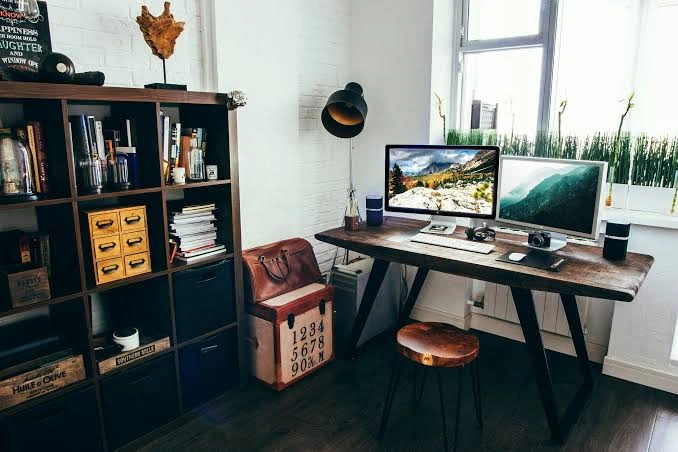
Creating a Productive Home Office Setup in a Studio Apartment | Choosing a high-rise apartment in the heart of the city often means compromising on square footage. Studio apartments have become a popular choice because they are practical, efficient, and low-maintenance. However, a major challenge arises when you have to bring your job into a living space that consists of just one open room. Without a solid strategy, a cozy bed can easily ruin your productivity—or worse, a pile of work documents can destroy your peace of mind during your downtime.
The ultimate key to creating a productive home office in a studio apartment comes down to visual separation and multi-functional design. Merging your private life and professional responsibilities on a single floor requires creativity so that limited space never holds your career back.
The Art of Optimizing Your Floor Plan
The first step is reshaping how you look at your available square footage. Instead of focusing only on horizontal floor space, start looking at the vertical potential of your walls. Bulky, traditional furniture with thick legs will only make a studio apartment feel cramped and claustrophobic.
As a solution, consider switching to a floating wall-mounted desk or a ladder desk. These types of desks attach directly to the wall and usually come with integrated shelving at the top. Because the area beneath the desk remains free of heavy furniture legs, the visual flow of the room stays open, and the floor is much easier to clean.
Beyond utilizing your walls, corner spaces that are often ignored can actually be your greatest asset. A specially designed corner desk fits perfectly into dead zones. When positioning your desk in a corner, try facing your chair toward the wall or an outside window. This position is highly effective at cutting off your view from the temptation of the bed or television during working hours.
Another clever option is repurposing an unused closet or a wall nook. You can remove the closet doors, install a sturdy desktop inside, and add a small spotlight. This concept, often called a “cloffice” (closet office), is highly valued for its functionality: as soon as your workday is done, you simply close the doors or a curtain, and your workspace instantly vanishes from sight.
Building Psychological Boundaries Through Visual Separation
The biggest drawback to working from a studio apartment is the blurry line between work hours and relaxation time. Staying in the exact same room all day can easily trigger mental fatigue. Because of this, you need to create the illusion of boundaries or visual zones so your brain knows when to focus and when to unwind.
The easiest way to map out your workspace is by placing a small, distinct area rug directly under your desk and office chair. Choose a rug with a color or pattern that contrasts slightly with your apartment flooring. Psychologically, stepping onto that rug sends a clear signal to your mind that you have now entered the “office,” even if it is only two steps away from your bed.
If you want a more physical boundary without making the room feel dark, make use of an open-backed bookshelf. Position this shelf perpendicular to the wall to separate your sleeping area from your workspace. The advantage of this layout is that natural sunlight can still pass through to all corners of the room, preventing the apartment from feeling smaller while giving you extra privacy during video calls.
In addition to physical dividers, lighting plays a crucial role in setting a working atmosphere. Dedicate one specific desk lamp to be turned on only when you are actively working. The focused beam from this lamp helps boost concentration. The moment you finish your tasks for the day, turn it off immediately. This simple ritual of switching off your work light acts as a mental trigger that helps your brain transition back into relaxation mode.
Storage Management: The Real Enemy is Clutter
In a limited living space, even a little bit of mess can immediately ruin the aesthetics and your concentration. Visual clutter on a desk is proven to increase stress hormones and lower focus. Therefore, a neat and tidy storage system is absolutely non-negotiable for a studio apartment that doubles as an office.
Optimize the area above your desk by installing floating shelves or a pegboard. On this board, you can hang stationery, important notes, and small decor items without taking up any surface space on your desk. The golden rule is simple: keep your desk surface as clear as possible of items you aren’t currently using.
Another aesthetic issue that frequently disrupts the comfort of modern apartments is the tangle of electronic cords. Laptop chargers, monitor wires, lamp cords, and phone cables snaking across the floor look incredibly messy. Use an under-desk cable management tray and zip-ties to hide all these power lines out of sight from your relaxation area.
It is also worth investing your budget in multi-purpose furniture. A storage ottoman or a small bench with a lift-top can serve as a neat hiding place for work documents over the weekend. The desk drawers you use should also have flexible dividers, allowing them to share space for office supplies and household items like spare linens or personal collections.
Protecting Your Body with Ergonomic Design
While apartment aesthetics are important, physical health should never be sacrificed for style. Working for hours on a couch or slouching over a bed will eventually lead to chronic neck and back pain.
When choosing an office chair, look for one that provides excellent lumbar support. Fortunately, many manufacturers now create ergonomic office chairs with minimalist designs and compact sizes. Opt for a chair without bulky armrests, or one that can slide completely underneath your desk when not in use, keeping the walking paths in your apartment completely clear.
Screen height is another crucial factor that laptop users often forget. Staring downward for long periods puts excessive strain on your neck muscles. Use a laptop riser or an external monitor adjusted to your eye level. Using this extra support not only saves your posture but also frees up space underneath the stand to tuck your keyboard away when you clock out.
Maintaining Life Balance in a Small Space
Ultimately, building the ideal workspace in a studio apartment is about respecting your own living environment. By combining smart furniture choices, sharp visual zoning, neat storage habits, and attention to physical health, your daily productivity is guaranteed to rise without sacrificing the comfort of your home.
Your home is the place you return to for rest, and with careful planning, that comfort will not disappear just because there is an efficient little office corner inside it. Creativity in spatial layout is proven to keep your mental well-being and professional life moving forward in perfect harmony.